

Hnycareershub
Add a review FollowOverview
-
Founded Date September 13, 2013
-
Sectors Digital & Creative
-
Posted Jobs 0
-
Viewed 993
Company Description
NHS: A Universal Embrace

In the sterile corridors of Birmingham Women’s and Children’s NHS Foundation Trust, a young man named James Stokes carries himself with the measured poise of someone who has found his place. His oxford shoes move with deliberate precision as he exchanges pleasantries with colleagues—some by name, others with the familiar currency of a “hello there.”
James carries his identification not merely as a security requirement but as a symbol of inclusion. It rests against a well-maintained uniform that betrays nothing of the challenging road that preceded his arrival.
What distinguishes James from many of his colleagues is not obvious to the casual observer. His bearing discloses nothing of the fact that he was among the first participants of the NHS Universal Family Programme—an effort crafted intentionally for young people who have been through the care system.
“I found genuine support within the NHS structure,” James explains, his voice controlled but tinged with emotion. His remark summarizes the core of a programme that seeks to reinvent how the massive healthcare system approaches care leavers—those often overlooked young people aged 16-25 who have transitioned from the care system.
The numbers paint a stark picture. Care leavers commonly experience poorer mental health outcomes, money troubles, accommodation difficulties, and lower academic success compared to their age-mates. Behind these clinical numbers are individual journeys of young people who have traversed a system that, despite good efforts, frequently fails in providing the nurturing environment that shapes most young lives.
The NHS Universal Family Programme, established in January 2023 following NHS England’s commitment to the Care Leaver Covenant, embodies a significant change in systemic approach. At its heart, it accepts that the whole state and civil society should function as a “collective parent” for those who have missed out on the constancy of a conventional home.
Ten pathfinder integrated care boards across England have led the way, creating frameworks that reconceptualize how the NHS—one of Europe’s largest employers—can open its doors to care leavers.
The Programme is meticulous in its approach, initiating with detailed evaluations of existing practices, forming oversight mechanisms, and garnering leadership support. It recognizes that meaningful participation requires more than lofty goals—it demands practical measures.
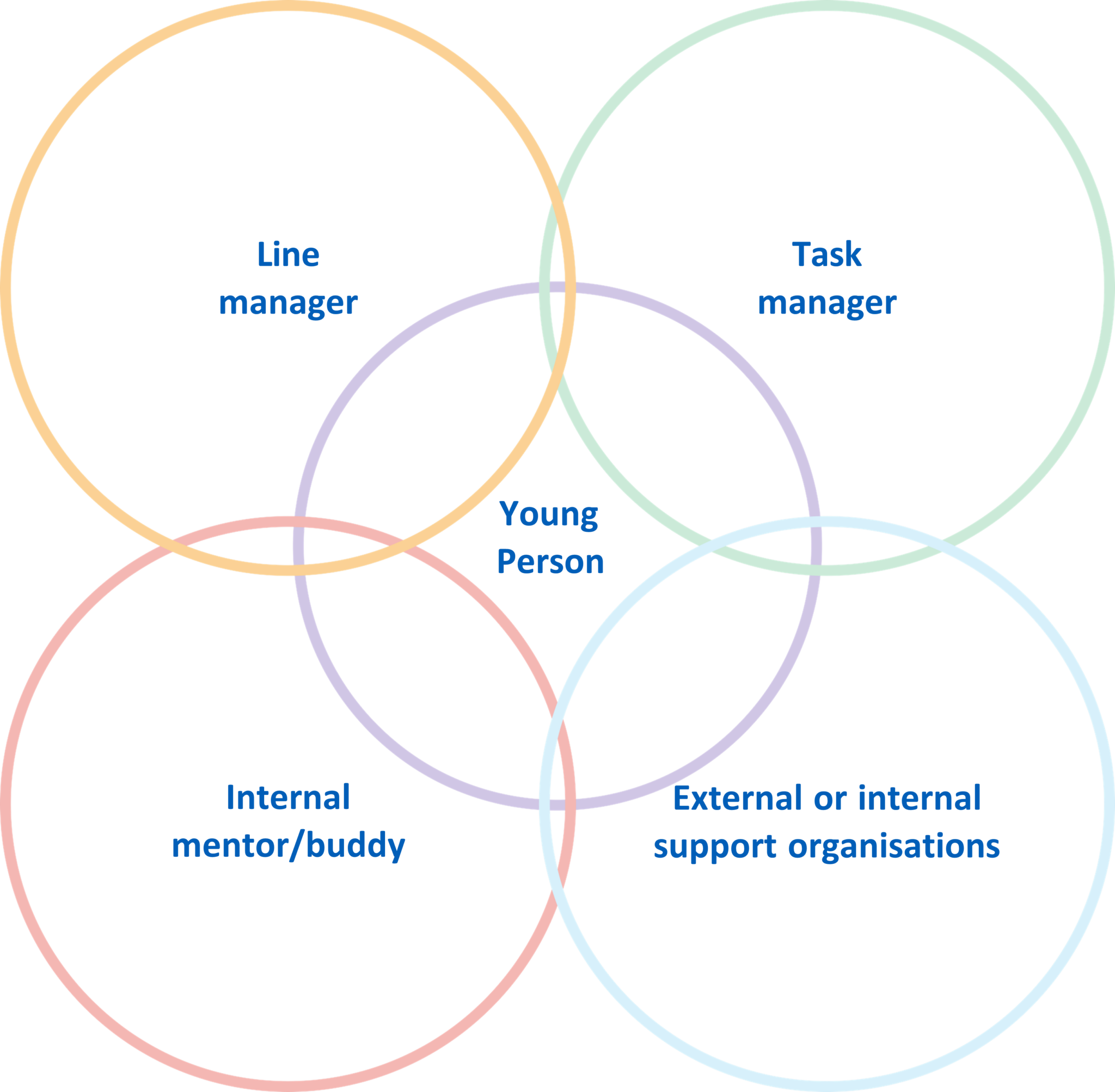
In NHS Birmingham and Solihull ICB, where James started his career, they’ve created a reliable information exchange with representatives who can offer assistance and counsel on personal welfare, HR matters, recruitment, and EDI initiatives.
The conventional NHS recruitment process—formal and potentially intimidating—has been carefully modified. Job advertisements now highlight attitudinal traits rather than long lists of credentials. Application processes have been redesigned to accommodate the particular difficulties care leavers might face—from not having work-related contacts to facing barriers to internet access.
Maybe most importantly, the Programme acknowledges that starting a job can create specific difficulties for care leavers who may be handling self-sufficiency without the safety net of familial aid. Concerns like travel expenses, identification documents, and banking arrangements—considered standard by many—can become significant barriers.
The brilliance of the Programme lies in its thorough planning—from explaining payslip deductions to offering travel loans until that critical first payday. Even apparently small matters like coffee breaks and professional behavior are carefully explained.
For James, whose career trajectory has “changed” his life, the Programme delivered more than employment. It gave him a perception of inclusion—that elusive quality that grows when someone senses worth not despite their past but because their unique life experiences enriches the institution.
“Working for the NHS isn’t just about doctors and nurses,” James notes, his gaze showing the modest fulfillment of someone who has discovered belonging. “It’s about a collective of different jobs and roles, a family of people who truly matter.”
The NHS Universal Family Programme exemplifies more than an employment initiative. It functions as a bold declaration that organizations can evolve to welcome those who have experienced life differently. In doing so, they not only transform individual lives but enhance their operations through the special insights that care leavers provide.
As James walks the corridors, his presence quietly demonstrates that with the right assistance, care leavers can thrive in environments once deemed unattainable. The support that the NHS has provided through this Programme symbolizes not charity but appreciation of overlooked talent and the fundamental reality that everyone deserves a community that champions their success.